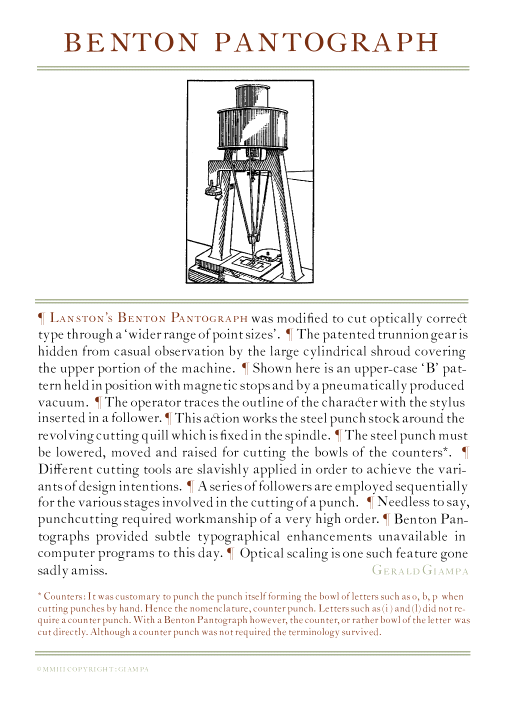
¶ THE BENTON PANTOGRAPH was modified by Lanston to cut optically correct type through a 'wide range of point sizes'. ¶ The patented trunnion gear is hidden from casual observation by the large cylindrical shroud covering the upper portion of the machine. ¶ Shown here is an upper-case 'B' pattern held in position with magnetic stops and by a pneumatically produced vacuum. ¶ The operator traces the outline of the character with the stylus inserted in a follower. ¶ This action works the steel punch stock around the revolving cutting quill which is fixed in the spindle. ¶ The steel punch must be lowered, moved and raised for cutting the bowls of the counters*. ¶ Different cutting tools are slavishly applied in order to achieve the variants of design intentions. ¶ A series of followers are employed sequentially for the various stages involved in the cutting of a punch. ¶ Needless to say, punchcutting required workmanship of a very high order. ¶ Benton Pantographs provided subtle typographical enhancements unavailable in computer programs to this day. ¶ Optical scaling is one such feature gone sadly amiss.
External link to the Printing Museum in London showing the work surface of a Benton Pantograph.
¶ TYPE COUNTERS: It was customary to punch the punch itself forming the bowl of letters such as o, b, p when cutting punches by hand. Hence the nomenclature, counter punch. Letters such as (i ) and (l) did not require a counter punch. With a Benton Pantograph however, the counter, or rather bowl of the letter was cut directly. Although a counter punch was not required the terminology survived.